
The Iran War's Economic Shockwaves: What to Expect
Assessing the economic impact of the war from a Solidarist economics lens.

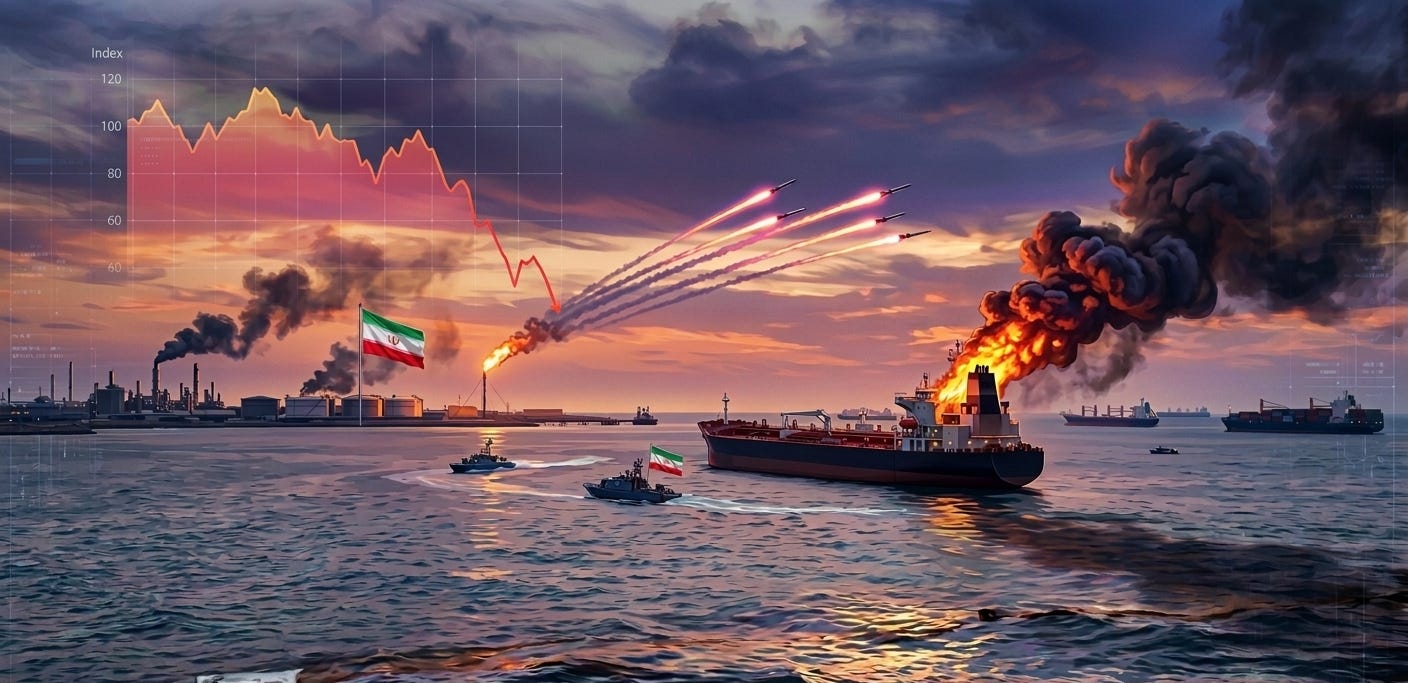
Operation Epic Fury launched on February 28, 2026, and has since been escalating to more and more of a war. Whatever the outcome of the war may be, it is very clear that the economic effects of it will reverberate throughout the world - even here in the United States.
In this briefing, I will share some important updates so that you can understand what is happening and why (spoiler alert!) gasoline prices will rise even more (despite already climbing about 35% from just last week). Many events have already transpired that seem to have different progressively worse economic effects. To illustrate this, I will present the sections as a series of punches in terms of their impact on the economy.
Before I continue, the most powerful weapon in this world that can end all wars is not a hypersonic missile or a nuclear weapon. It is prayer. I ask that you pray for an end to this war, all wars, and all sufferings due to war.
Now…
The Strait of Hormuz: What is it and why is it important?
The Strait of Hormuz is an extremely narrow choke point in the Persian Gulf that sits between Iran and the Arab peninsula where approximately 20% of the world’s crude oil traverses - in addition to natural gas and other materials / general cargo. Specifically, tankers from Kuwait, Bahrain, Qatar, Iraq, Iran, and others have to pass through here just to deliver to ports around the world.
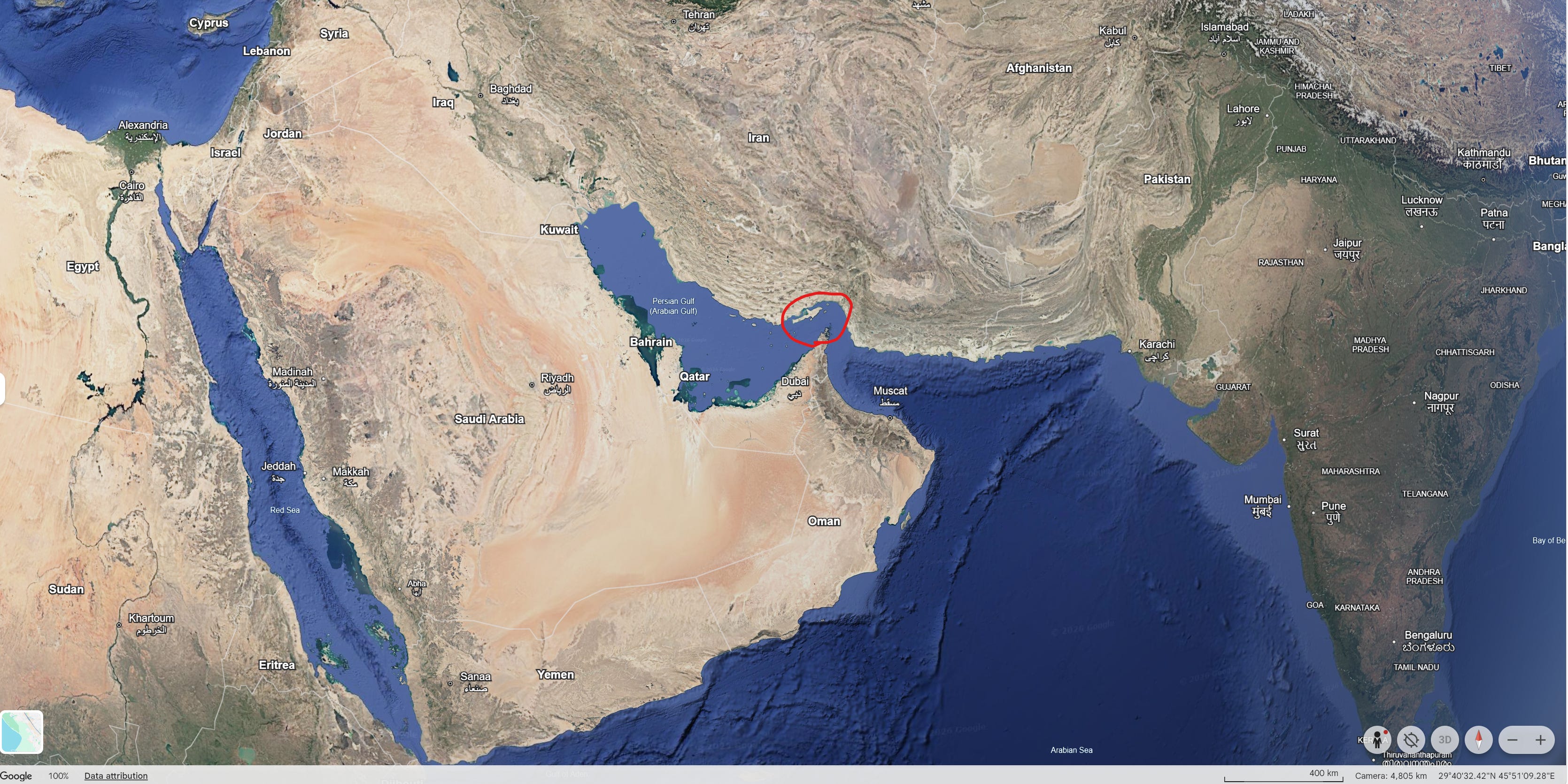
The map I obtained from the IMF below shows the traffic flows of tankers that traverse the Strait of Hormuz:
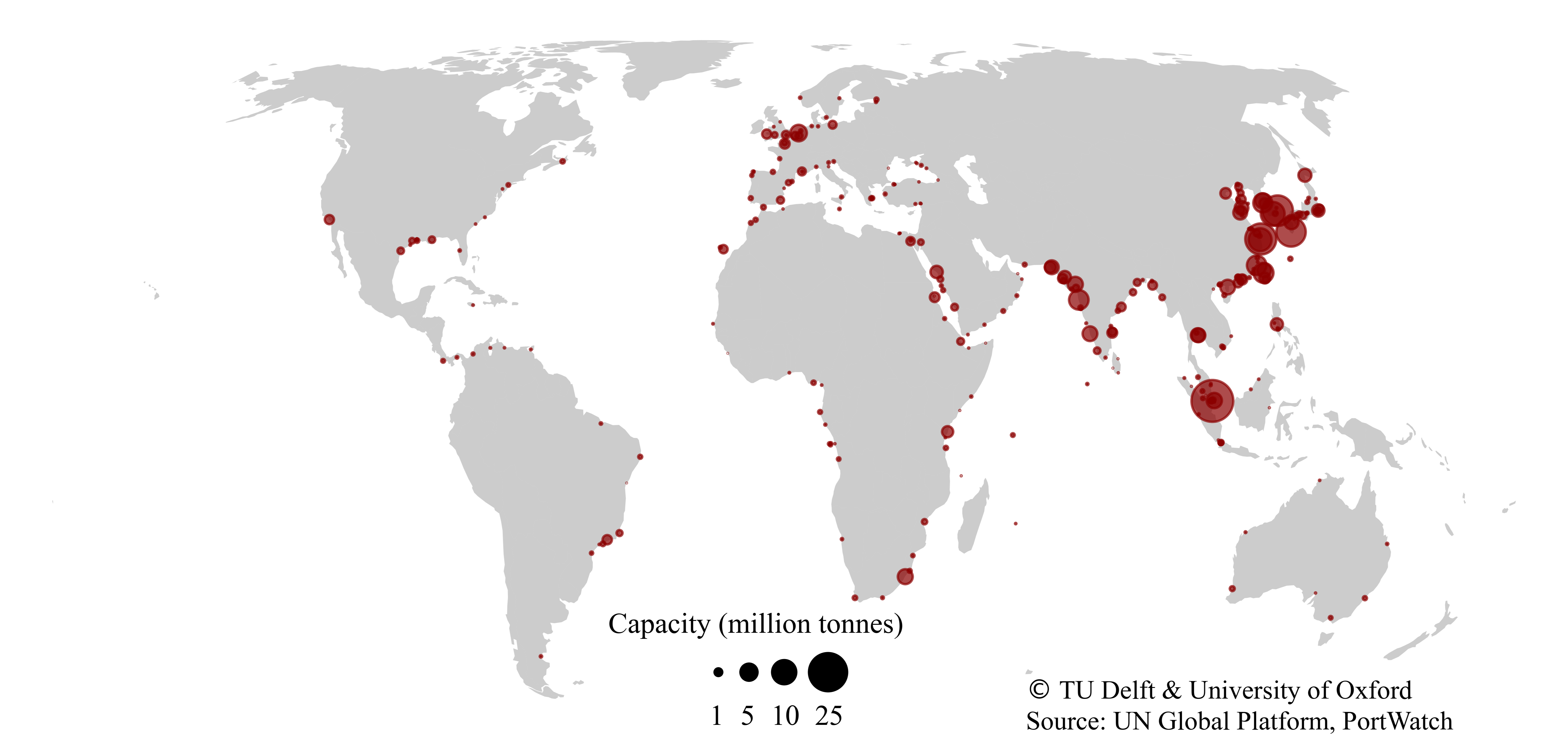
The Jab: Blocking The Strait of Hormuz
As of February 28, the Iranian IRGC have completely shut off any travel through this Strait - even attacking at least two vessels (probably more by this point) trying to traverse it.
Here is a visualization I made using ship arrivals in the Strait of Hormuz confirming that the IRGC are enforcing their blockade:
The drastic decline in tankers travelling through the Strait of Hormuz means that there will be less oil and gas available on the market in the short term. While only a fraction of this oil and natural gas comes to the United States, gas prices will still rise since crude oil is a globally traded commodity. My initial modeling shows that if crude oil hits $120 / barrel, there will be an additional 20% increase in the price of gasoline.
The Uppercut: Rising Maritime Insurance Rates
With rising risk, comes rising rates:
The numbers on their face seem low - we are talking about less than 5% of a vessel’s value - however, the increase is astonishingly high: about an 1,100% increase in the rate! Of course, most vessels are not paying this - they can’t use it anyways - but it does show that maritime insurance markets in the region are essentially unraveling since it appears there is no legitimate way to price in the fundamental uncertainty of traveling through the region (by definition).
The Knockout: Gulf Energy Shutdowns
Even if we assume that the war ends within the next week and the Strait of Hormuz is open with insurance rates functioning as they did prior to the operation, there is still a huge problem: the shutdowns of the energy infrastructure.
To assess this, I found confirmed closures / operational slowdowns that were due to the war and split them out by shutdown type:
1.) Those due to direct strikes
2.) Precautionary shutdowns as a result of the conflict
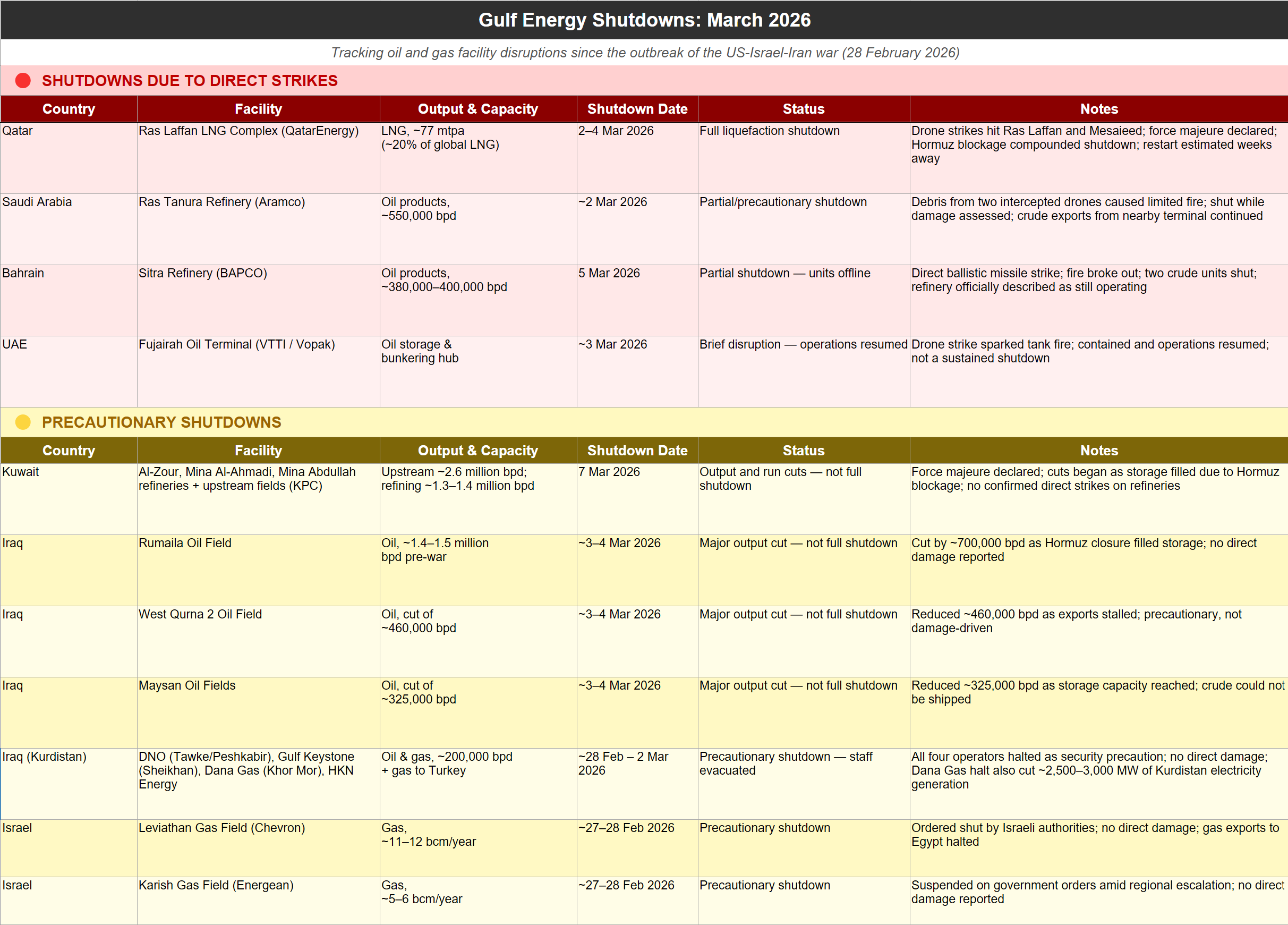
These shutdowns are as of the time of my writing (March 8, 2026) so it is very possible that more shutdowns can occur as the war continues - whether due to direct strikes on the facilities or as a precaution since it is both a safety and a financial risk to operate a facility in the Gulf.
This is not only going to affect gasoline prices but will also affect the prices of anything that uses crude oil as an intermediate good (a lot of things). In other words, it is highly likely that we will see a general increase in the price level within a few months just from this operation.
The effects of these would be especially hard on European nations that rely on imported LNG (liquified natural gas) from the Gulf. To add insult to injury, it appears that Turk Stream and Blue Stream are also under threat from Ukraine while Russia appears to prefer to abandon Europe’s energy market entirely.
In that scenario, Albania is one of the few countries that will not have to worry about LNG prices for electricity since nearly 100% of their electricity is from hydropower.
The Potential Overkill: Financial Crisis and the Bursting of the AI Bubble
I won’t go into too much detail on this one since I am trying to keep this brief, but essentially the Gulf nations invest a significant amount of their trade surplus funds into US equities. If - for whatever reason - they decide to withdraw their capital from US equities, this could spark a real financial crisis…especially since it could be the catalyst that bursts the AI bubble. This is because many funds are overexposed to AI stocks (known as the Magnificent 7 or MAG 7) and resultingly would be the first equities to take a hit since it is a matter of asset concentration - nearly a quarter of the S&P 500’s value is from the MAG 7. That could of course cause a chain reaction that leads other over-leveraged institutional investors to dump their holdings which would undoubtedly include MAG 7, and this would continue and negatively affect nearly everyone’s retirement accounts in addition to credit (both private and not) as a whole. In other words, this would be a Minsky moment resulting from financial fragility over the years.
This is still a tail-end scenario but it does seem more likely to occur since there already appear to be liquidity concerns in the private credit market (restricted withdrawals from Black Rock and others).
Solidarity
The economic impact from this war will be real and they will be felt throughout the world. As with nearly all energy crises, the ones hit hardest will be those
1.) over exposed to the energy coming from this region and
2.) the poor since they spend a greater portion of their income on gasoline.
This is also why gas taxes and “climate” taxes are met with fierce opposition: it is a regressive tax that hurts the needy. A lot of people rely on driving their used truck with all of their equipment daily just to make a living for themselves and their family - any spike in their transportation costs will almost certainly be absorbed by them…in two ways:
1.) they pay higher gasoline prices at the pump so now have less money
2.) they lose potential work since their current and prospective clients are cutting back due to the rise in gasoline prices and general increase in living standards that result.
In an extreme situation where credit access is prohibited, this means that person has to cut back on many things (some of which might even be necessities). However, most will fill the gap through credit and pay the exorbitant interest rates (the sin of usury!).
Conclusion
Overall there are a lot of events happening and it seems like things are getting crazier rather than calmer by the hour, so I wanted to provide this brief economic assessment now. Things are constantly changing but - like I said above - even if the war were to end tomorrow, we would still feel the economic pain: albeit it would be less than if it continues.